
In this article
Lately I have been talking with a number of nonprofits, and I keep seeing the same pattern: the organization is doing meaningful work, has people who care deeply about it, and has built an audience on Facebook, Instagram, TikTok, or another platform.
Then someone asks a simple question: “Where can I learn more?”
The answer is often a trail of profile links, old posts, donation pages, and messages. The information is out there somewhere, but finding the official version of it can take more work than it should.
That is why every nonprofit needs a website of its own.
Not an enormous website. Not a complicated website. But a clear, organization-owned home on the web that ties everything else together.
Social media is useful. It is also rented space.
I am not suggesting that nonprofits should leave social media behind. Social media is where people discover organizations, see the daily work, connect with real stories, and share a cause with friends. For a small nonprofit especially, a good post can introduce its work to people it would never otherwise have reached.
That matters!
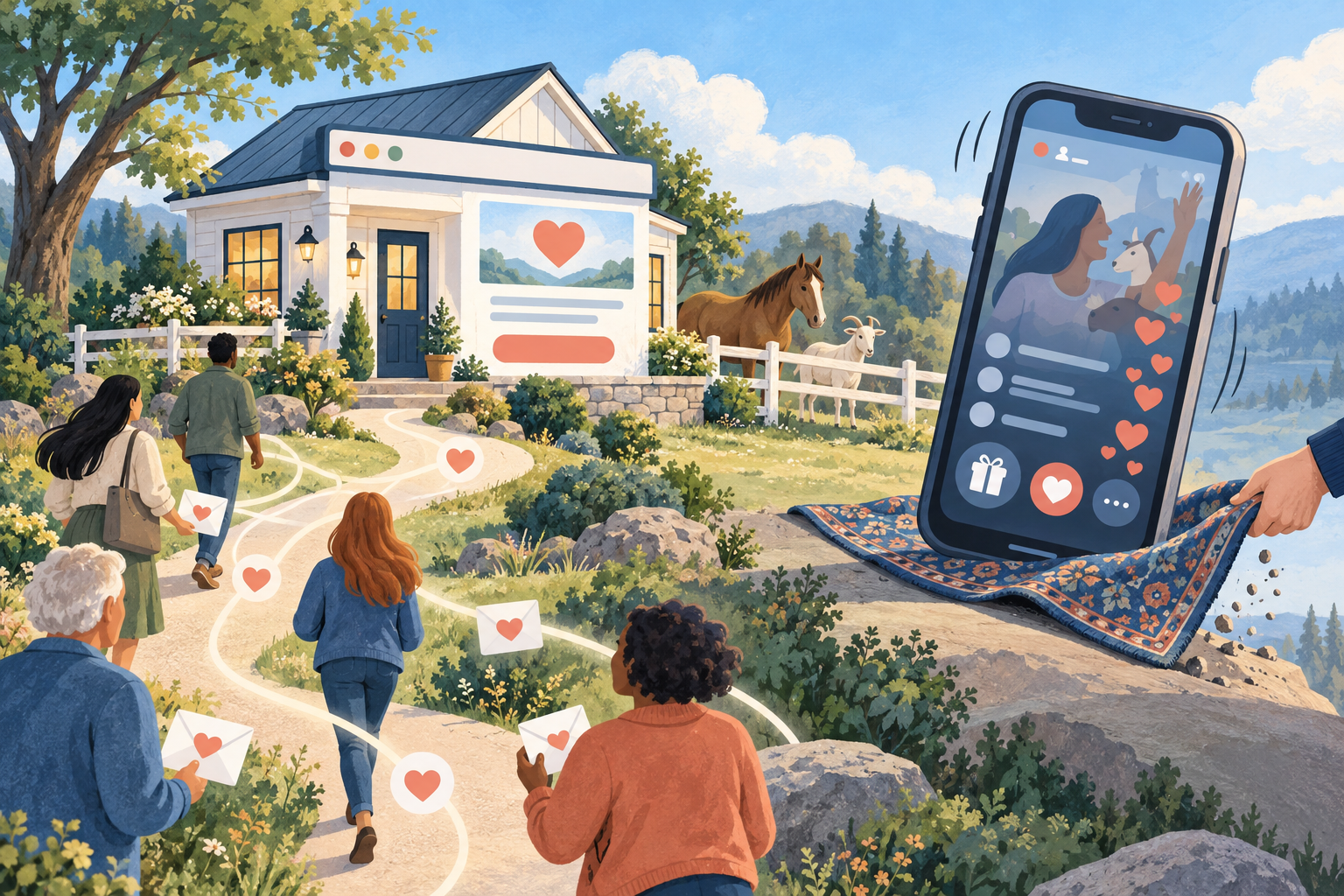
But a Facebook page, TikTok account, Instagram profile, or fundraising-platform page is still space controlled by someone else. The platform decides how posts are displayed, who sees them, what features remain available, and what happens if an account is restricted, compromised, or simply buried by the algorithm.
Those platforms are valuable roads that bring people to you. They should NOT be the building with your name on the door.
Your website should be that building.
A website is the central source of truth
When someone hears about a nonprofit for the first time, they should be able to find one place that answers the questions that matter:
- Who are you?
- What is your mission?
- Who or what do you serve?
- How can someone contact you?
- How can someone volunteer, donate, foster, attend an event, or otherwise help?
- Where are your official social-media accounts?
That is the central job of a nonprofit website: it gives people one reliable place to understand the organization and take the next step.
The website does not need to replace every other tool. A nonprofit can still use a trusted third-party donation service, an event platform, a volunteer form, an Amazon Wish List, and every social network that reaches its community. The website simply brings those pieces together in one place that belongs to the organization.
Instead of making someone hunt through a profile bio or an old post, the site can clearly link to the current donation page, the current wish list, the current contact method, and the official social accounts. When one of those destinations changes, the organization updates one link on its own site and keeps the front door accurate.
Trust is built through clarity
People are understandably careful before donating money, sharing personal information, or getting involved with an organization they do not know. A clear website does not prove that a nonprofit is trustworthy by itself, but it does make it easier for a legitimate organization to show people that they have found the real thing.
Consistent information matters. A visitor should see the same name, mission, contact details, and links wherever they encounter the organization. Real photographs, current updates, and a clear explanation of the work all help a supporter understand who is behind the name and what their help will accomplish.
This is especially important when a nonprofit is small or newly formed. Small organizations often rely on personal relationships and word of mouth at first. That is normal. A website helps those relationships travel farther without making every new supporter start from scratch.
It also creates a place for information that does not fit neatly into a social-media post: volunteer expectations, visiting policies, adoption or foster information, annual updates, partner acknowledgements, frequently asked questions, and the details someone needs before deciding to get involved.
Keep the website simple enough to stay current
The best nonprofit website is not the one with the most pages, animations, or expensive features. It is the one that is accurate, useful, and maintained.
For many organizations, a strong first version can be quite small:
- A home page that clearly explains the mission.
- An About page that introduces the organization and its people.
- A contact page with a reliable way to reach someone.
- A “How to Help” page with current donation, volunteer, wish-list, and event links.
- Links to every official social-media account.
That is enough to create a real hub. More pages can come later as there is material worth adding.
The important part is ownership. The nonprofit should control the domain name, the website account, and the primary email address associated with them. Those accounts should not live only under a volunteer’s personal login or disappear when one well-meaning person steps away. Put the access details, renewal information, and recovery methods somewhere the organization can safely maintain them.
Let social media do what it does best
The goal is not to make social media less important. The goal is to give it a clearer job.
Use social media to tell the stories that make people care. Share the daily work. Introduce the animals, volunteers, staff, or community members behind the mission. Post updates from events. Answer questions. Build a real conversation with the people who want to follow along.
Then point people back to the website whenever they need the official details.
Put the website in every profile. Include it when someone asks how to donate or volunteer. Link to the relevant page when you announce an event or share a need. Let the website be the place where a new supporter can get the complete picture rather than trying to assemble it from several platforms.
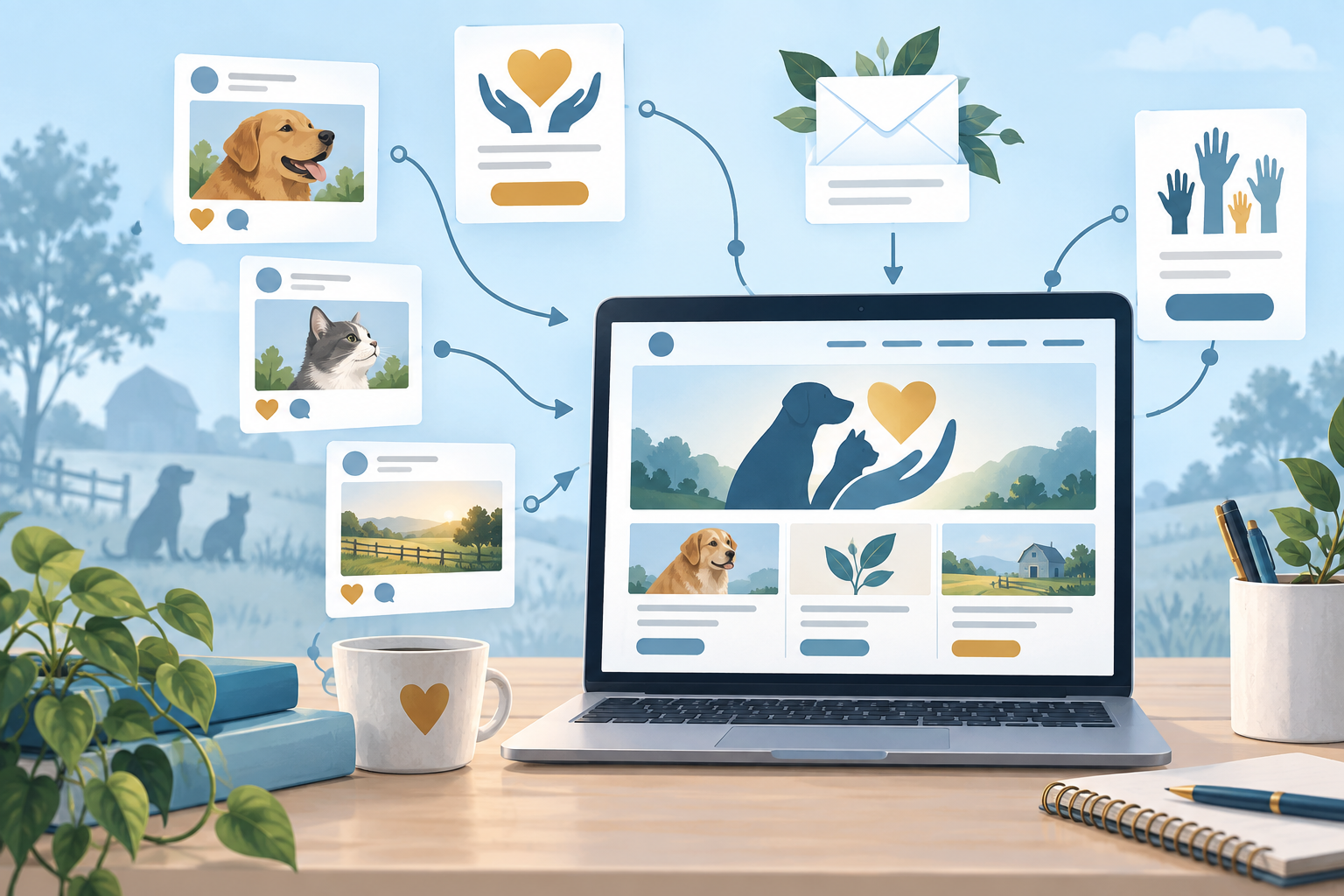
That creates a simple system:
Social media helps people find you. Your website helps them understand you and take the next step.
The front door should belong to you
Nonprofits already have enough to manage. There are people, animals, programs, events, fundraising needs, bills, emergencies, and the ordinary work that rarely makes a good social-media post. A website should not become another unnecessary burden.
But it is worth having one clear, dependable place that the organization owns.
Platforms will change. Trends will change. An account may grow quickly, fade, or become difficult to use. Your organization’s mission should not be scattered across whatever service happens to be popular this year.
Build a simple home on the web. Keep it current. Link everything back to it.
That is how a nonprofit turns a collection of online profiles into a public presence it can actually call its own.
If you need help with your existing website or need to build one feel free to reach out to me.